


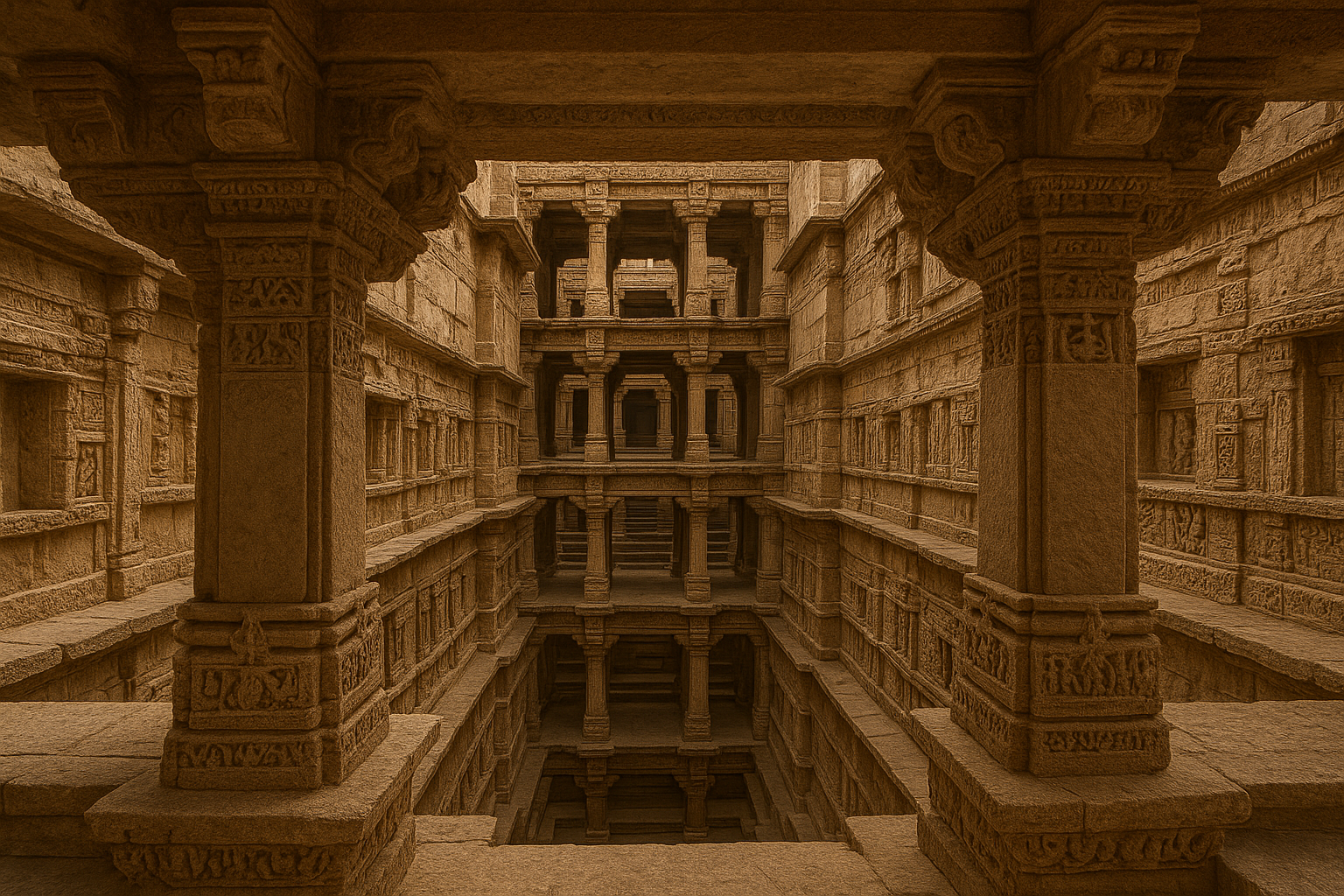
Introduction — Where Water Meets Wonder
In the heart of western India, Gujarat tells stories not just through its people or festivals, but through stone, symmetry, and silence. The state’s stepwells — locally known as vavs — are some of India’s most breathtaking architectural marvels.
These aren’t just old wells; they are underground temples of water, built centuries ago to collect rain and serve travelers. Every step, carving, and pillar tells a tale — of devotion, engineering genius, and artistic grandeur.
If you’ve ever been fascinated by how history and architecture intertwine, this journey through Gujarat’s ancient stepwells and stories is for you.
1️⃣ Rani ki Vav, Patan — The Queen’s Masterpiece
A UNESCO World Heritage Site, Rani ki Vav (The Queen’s Stepwell) in Patan is often called the “Queen among stepwells,” and rightfully so. Built in the 11th century by Queen Udayamati in memory of her husband King Bhimdev, it’s not just an architectural wonder — it’s a poem carved in stone.
Descending the seven levels of Rani ki Vav feels like stepping into another world. Each wall, pillar, and niche is adorned with intricate sculptures of Hindu deities, celestial beings, and mythological scenes. The 1,500+ carvings are so detailed that art historians often compare them to the Ajanta and Ellora caves.
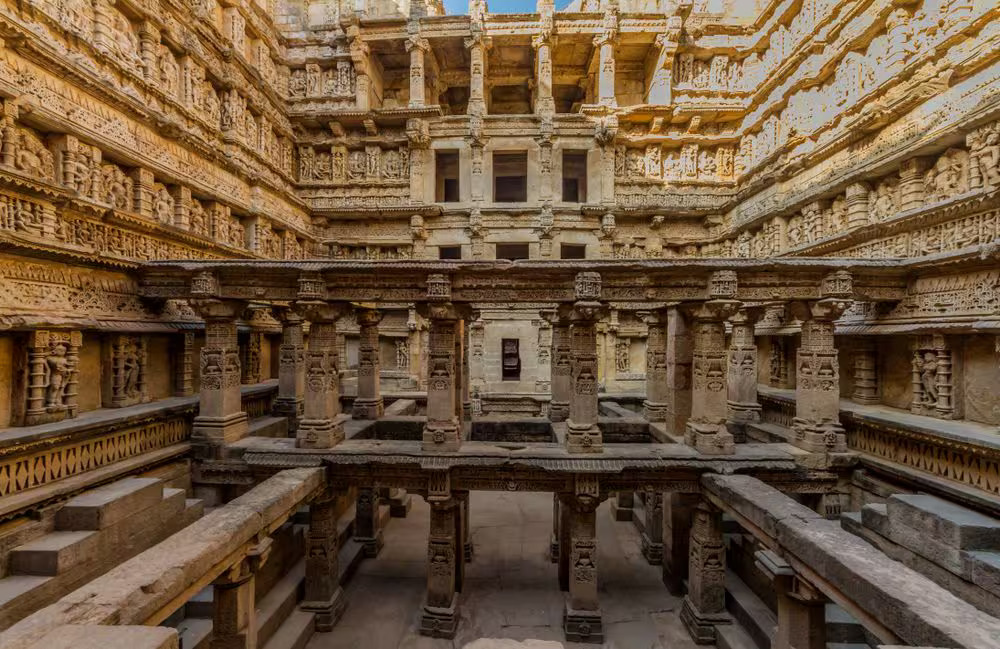
What’s most astonishing is its precision in geometry and alignment — designed to channel light beautifully even underground. During monsoon, when the well fills, it becomes a shimmering mirror of the past.
🧭 Best Time to Visit: November to February
📍 Location: Patan (125 km from Ahmedabad)
2️⃣ Adalaj ni Vav — The Tale of Love and Loss
Just north of Ahmedabad lies Adalaj Stepwell, built in the 15th century by Queen Rudabai. But this stepwell is as much a love story as it is an engineering marvel.
According to legend, Rudabai’s husband, Rana Veer Singh, was killed before the stepwell was completed. The conquering king fell in love with her and offered to finish the stepwell if she married him. She agreed — but after it was built, she chose to end her life rather than marry her husband’s killer.
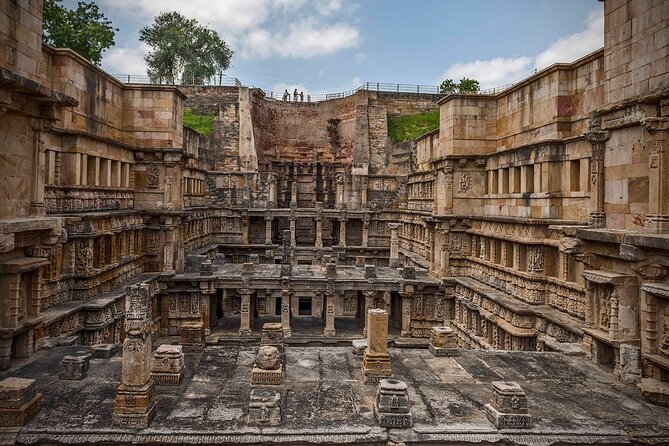
That story of sacrifice still echoes through the sandstone corridors, carved with floral motifs, elephants, and geometric patterns inspired by Hindu and Islamic art.
When sunlight filters through the lattice openings, it creates mesmerizing shadows that move as the day passes — making Adalaj a photographer’s dream.
🧭 Best Time to Visit: October to March
📍 Location: Adalaj village, 19 km from Ahmedabad
3️⃣ Dada Harir Vav, Ahmedabad — The Underground Sanctuary
Hidden in the bustling city of Ahmedabad, near Asarwa, lies Dada Harir Stepwell — one of the most photogenic and lesser-known heritage gems of Gujarat.
Built during the reign of Mahmud Begada in the 15th century, this stepwell is five stories deep and made entirely of sandstone. Arabic and Sanskrit inscriptions coexist here — a testament to Gujarat’s rich cultural fusion.
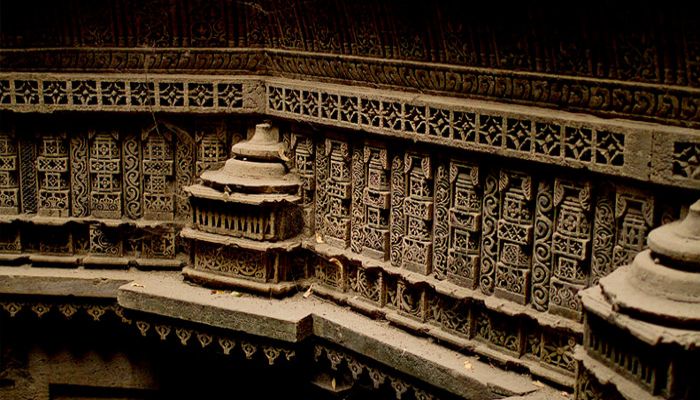
Descending into Dada Harir feels like walking through time: cool air, the rhythmic echo of footsteps, and shafts of light piercing the darkness. It’s quiet, sacred, and humbling.
🧭 Best Time to Visit: Year-round
📍 Location: Near Asarwa, Ahmedabad
4️⃣ Navghan Kuvo & Uparkot Stepwell, Junagadh — Where History Runs Deep
While Junagadh is known for its fort and Buddhist caves, it also hides one of Gujarat’s oldest stepwells — Navghan Kuvo. Believed to have been built in the 11th century, it lies within the Uparkot Fort complex.
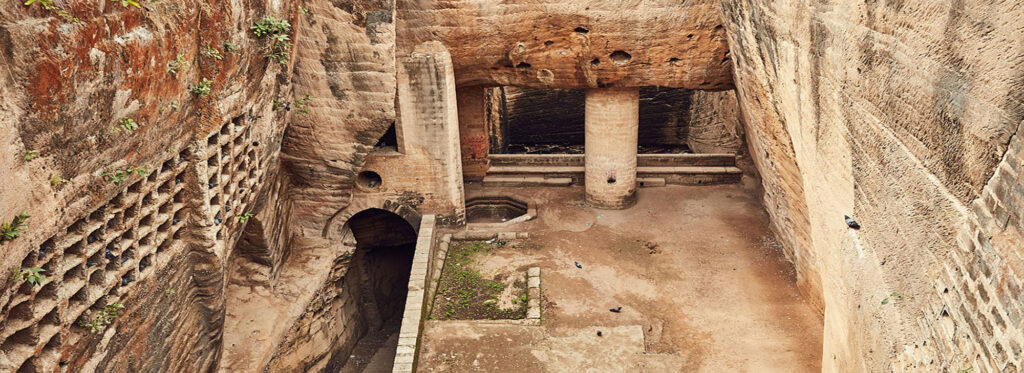
This stepwell isn’t ornate like Rani ki Vav — it’s rugged and powerful, carved straight into solid rock. The spiral staircase descends deep into the earth, creating a mystical tunnel effect. Historians say it was used as a secret water source and shelter during sieges.
Nearby, you can explore Adi Kadi Vav, another fascinating stepwell that feels more like a descent into a natural cavern than a man-made structure.
🧭 Best Time to Visit: November to February
📍 Location: Uparkot Fort, Junagadh
5️⃣ Helical Stepwell, Champaner — The Architect’s Secret Spiral
Deep within the UNESCO-listed Champaner-Pavagadh Archaeological Park, you’ll find the Helical Stepwell — a simple yet elegant structure built during the 16th century.
Unlike traditional stepwells with symmetrical levels, this one spirals gracefully downward, hugging the circular well. Its design is pure geometry, showcasing early Islamic architectural influence in Gujarat.
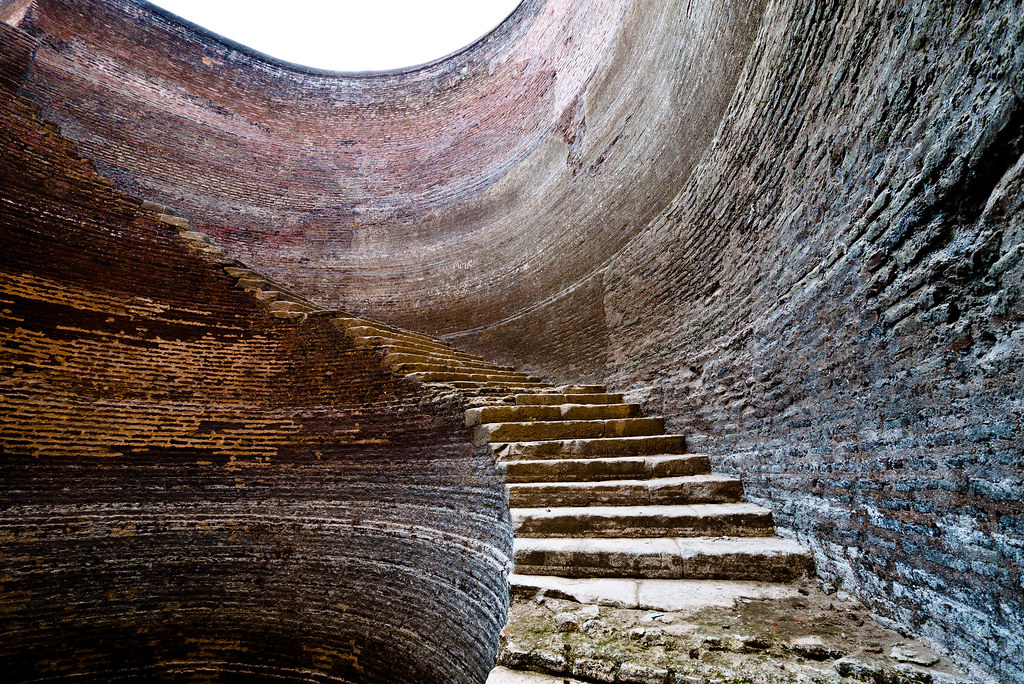
It’s lesser known but perfect for travelers who enjoy peaceful, offbeat sites. A hidden treasure for photographers and architecture lovers alike.
🧭 Best Time to Visit: October to February
📍 Location: Champaner, near Vadodara
Why Stepwells Matter Today
Stepwells weren’t just architectural feats; they were symbols of sustainability long before the concept became popular. They collected and stored rainwater, offering communities a lifeline during Gujarat’s arid summers.
Beyond their function, they became social hubs — places where women gathered, traders rested, and artists found inspiration. Each vav tells not just a story of stone, but of society, faith, and innovation.
As modern cities grow, these ancient structures remind us of a timeless truth: architecture is not just about building; it’s about belonging.
🗺️ Plan Your Gujarat Stepwell Trail
If you want to explore Gujarat’s architectural heritage at your own pace, here’s a suggested route:
Ahmedabad → Adalaj → Patan → Champaner → Junagadh → Ahmedabad
This loop covers some of the most iconic and offbeat vavs — perfect for a 4–5 day cultural road trip. Don’t forget to carry a wide-angle lens and visit early morning for soft golden light.
✨ Final Thoughts
Gujarat’s stepwells are not just relics of history — they’re living stories etched in stone. Each one carries whispers of queens, warriors, architects, and everyday people who once drew water from their depths.
To wander through them is to walk through centuries of art, devotion, and human ingenuity.
So next time you travel through Gujarat, go beyond the guidebooks — descend the ancient steps, listen to the silence, and let the stories rise to the surface.
Because every drop that once filled these wells still reflects the timeless spirit of Gujarat.



 Bitcoin
  Ethereum
  Tether
  BNB
BNB  XRP
XRP  Solana
  TRON
TRON  Dogecoin
  Cardano
  Chainlink
  Stellar
  Litecoin
  Avalanche
  Sui
Sui  Shiba Inu
  Polkadot
  Bitget Token
  Internet Computer
  Pepe
Pepe  KuCoin
  Worldcoin
  Official Trump
  Ethena
  NEXO
NEXO  Kaspa
Kaspa  Aptos
Aptos  Filecoin
  VeChain
  Arbitrum
  Bonk
Bonk  PancakeSwap
  FLOKI
FLOKI  The Graph
  Ethereum Name Service
  1INCH
1INCH  Illuvium