


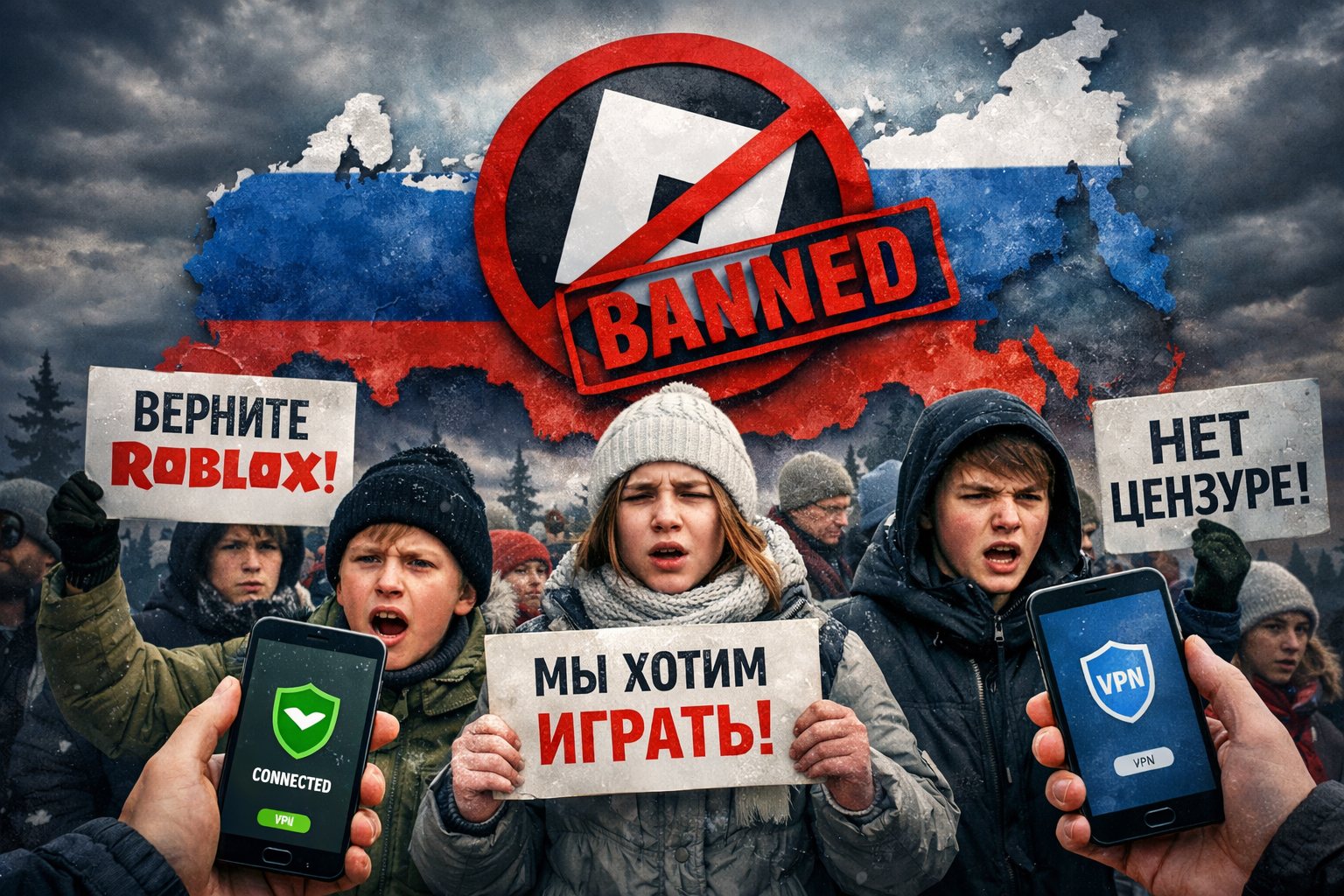
In a surprising move, Russia has officially blocked access to Roblox, one of the world’s most popular online gaming platforms. The country’s telecom watchdog, Roskomnadzor, claims that the game contains content that violates Russian laws aimed at protecting children. They specifically mention concerns about “extremist materials,” “LGBT propaganda,” and other unsafe content for minors.
For many Russian kids and teenagers, Roblox isn’t just a game — it’s a place to hang out, create, and play with friends online. So, naturally, the news of the ban has sparked widespread frustration and even anger. Social media and online forums are flooded with messages from young users asking, “Why can’t we play?” Some are even writing letters directly to government offices, including the Kremlin, expressing their disappointment.
The reaction hasn’t stopped online. Small protests have popped up in some cities, with kids and teens holding signs calling the ban a “digital Iron Curtain.” Many worry that blocking Roblox could push players toward VPNs and other workarounds, which might solve the access problem but won’t address the bigger issue of internet freedom and trust.
Roblox Corporation has said they are willing to work with Russian authorities to comply with local rules and potentially get the game unblocked. This could include tightening moderation or restricting certain features. Still, it remains unclear when — or if — Russian players will be able to return to their favorite game.
This incident is part of a bigger debate: how can governments protect children online without completely cutting them off from global platforms and experiences? For now, Roblox fans in Russia are left waiting, frustrated, and looking for ways to stay connected in a suddenly restricted digital world.



 Bitcoin
  Ethereum
  Tether
  BNB
BNB  XRP
XRP  Solana
  TRON
TRON  Dogecoin
  Cardano
  Chainlink
  Stellar
  Litecoin
  Avalanche
  Sui
Sui  Shiba Inu
  Polkadot
  Bitget Token
  Internet Computer
  Pepe
Pepe  KuCoin
  Worldcoin
  Official Trump
  Ethena
  NEXO
NEXO  Kaspa
Kaspa  Aptos
Aptos  Filecoin
  VeChain
  Arbitrum
  Bonk
Bonk  PancakeSwap
  FLOKI
FLOKI  The Graph
  Ethereum Name Service
  1INCH
1INCH  Illuvium